How do magnetic keyboards work?

TMR Technology Explained

TMR Technology
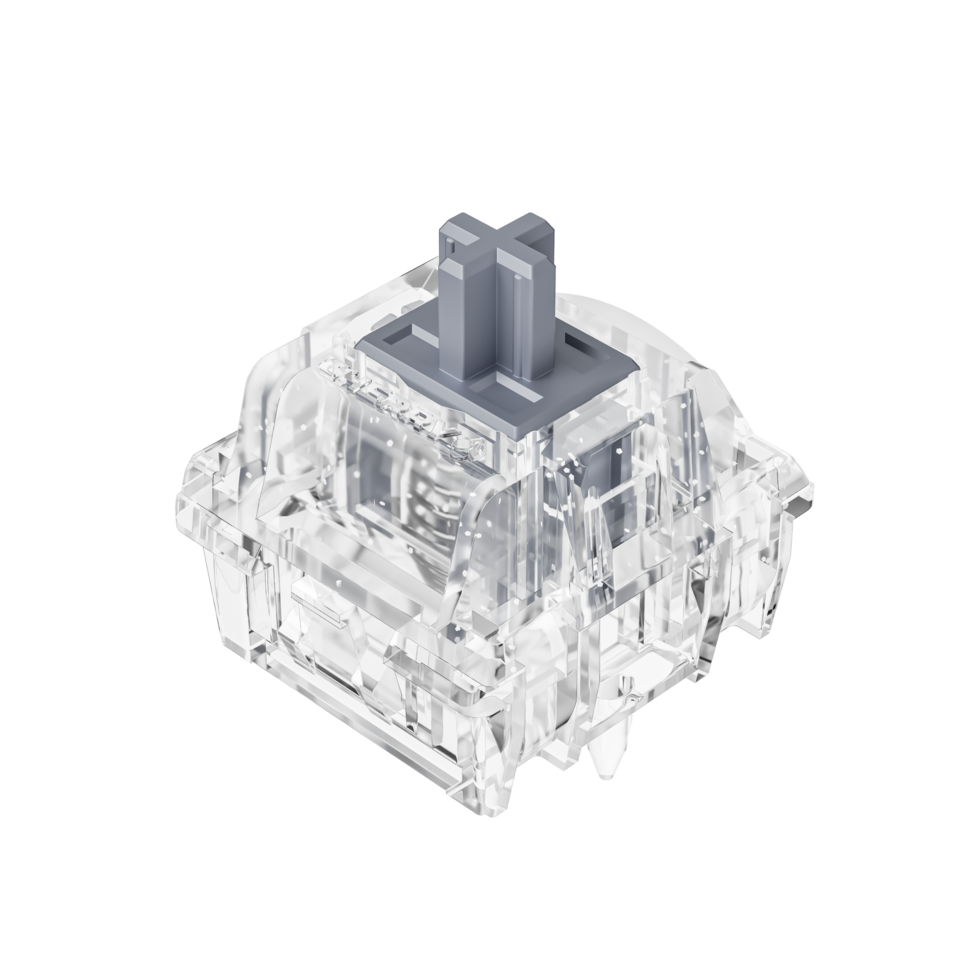
Magnetic CHERRY Switch

What is TMR?

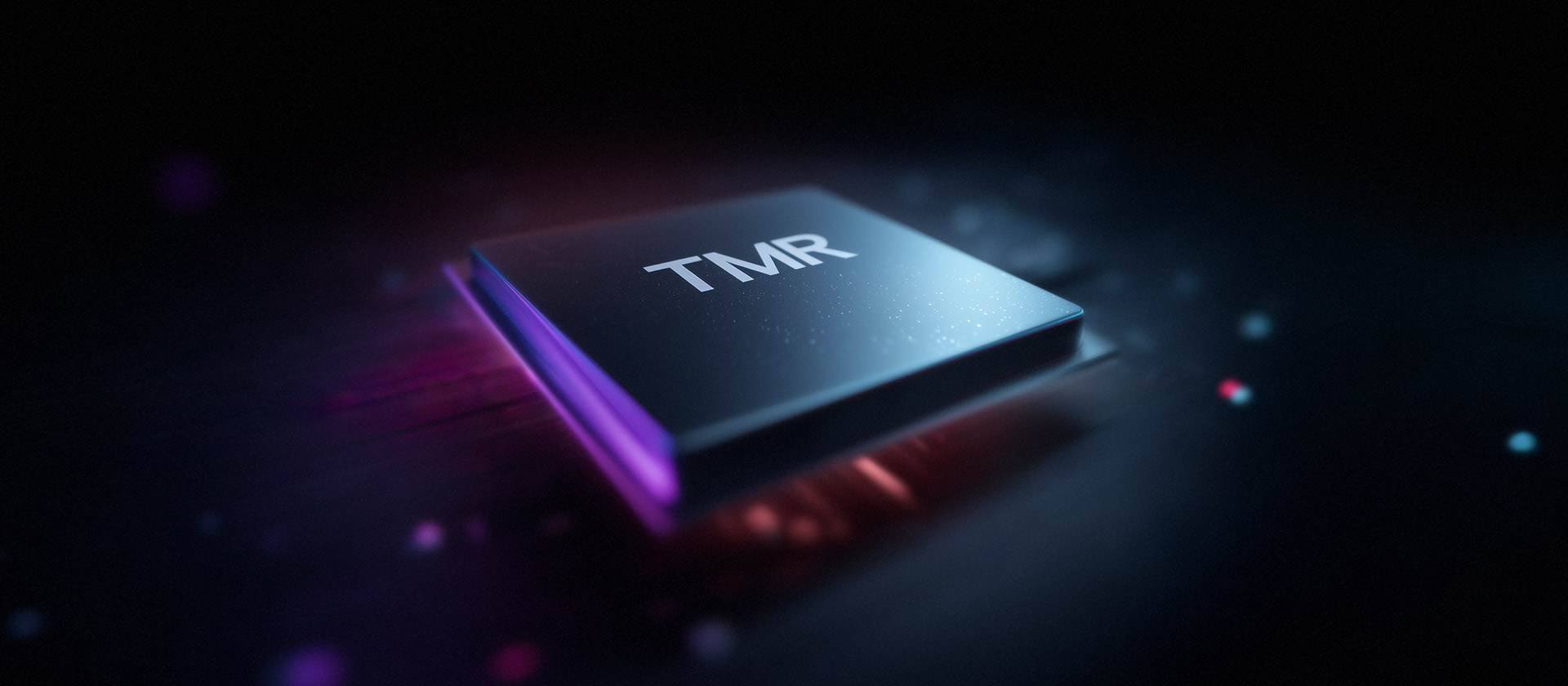
TMR (Tunnel Magnetoresistance) is a sensor technology for magnetic keyboards that measures key movement contactlessly via magnetic fields, enabling highly precise input.

At its core, a TMR keyboard uses a quantum mechanical tunneling effect. This makes it possible to detect even the smallest changes in the magnetic field. As a result, even minimal key movements are reliably captured and converted into stable signals. The outcome is consistently precise, low-wear input detection that surpasses traditional technologies in accuracy and consistency.

TMR Switch
Magnetic TMR switches explained simply

How do TMR switches work?

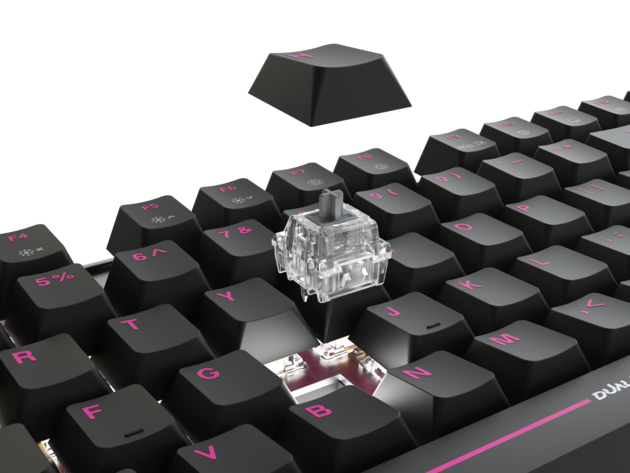
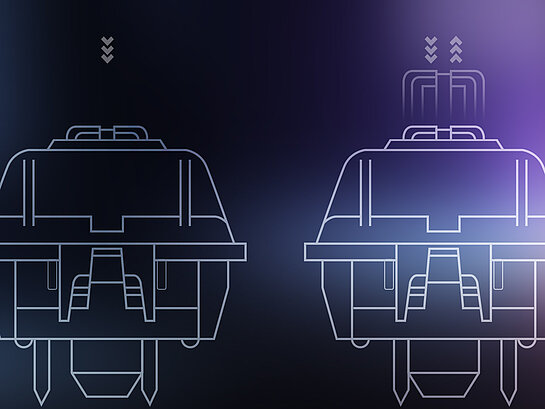
  • Keystroke: When you press a key, the keycap moves downward together with the switch stem beneath it. A small magnet inside the switch is slightly displaced.
  • Magnetic field change: The movement of the magnet alters the magnetic field in the sensor area.
  • Measurement in the sensor: The TMR sensor responds to this change by altering its electrical resistance. This is based on a quantum mechanical effect: electrons move through an extremely thin layer in the sensor, and their movement is influenced by the magnetic field. Even the smallest changes can be measured with high precision.
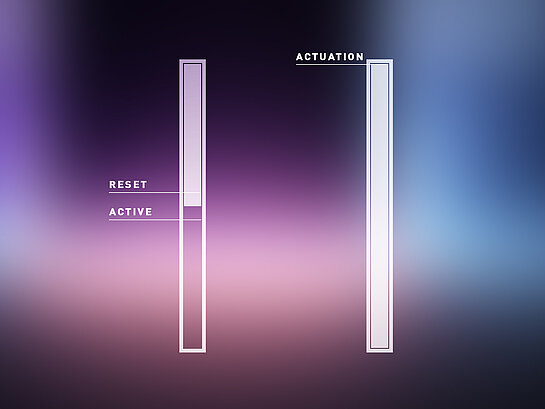
  • Signal actuation: The change in resistance is converted into an electrical signal, processed by the keyboard controller or firmware and transmitted to the computer. Actuation can occur during the key movement, not only at the end of the keystroke.
  • Key reset: When released, the key moves back and the magnetic field adjusts accordingly. The sensor continuously detects this change, allowing the key to be triggered again even while it is moving back—even before it has fully returned to its original position.

The entire process is contactless, with no physical switching points. This results in exceptionally precise, consistent, and durable input detection.

Why are keyboards with TMR more precise?

TMR compared to other technologies

Modern keyboards are increasingly adopting magnetic technologies. What advantages do magnetic keyboards offer over mechanical ones? And do all magnetic switches perform equally well?

CHERRY MX Technology

Is magnetic better than mechanical?

From a technological perspective, magnetic switches offer greater precision, customizability, and lower wear. Mechanical switches, on the other hand, stand out with their clearly defined typing feel, direct feedback, and wide variety of options. Mechanical keyboards have proven themselves over decades, are widely compatible, and remain highly popular among enthusiasts. While magnetic keyboards are technically superior for pro gamers and highly customized setups, mechanical keyboards remain a strong choice for traditional typing and tactile feedback. Ultimately, however, it comes down to the specific intended use and personal preferences.

TMR Technology vs Hall Effect

Is TMR better than Hall Effect?

In many areas, TMR offers measurable advantages over Hall Effect (HE), particularly in precision and signal quality. Both technologies are contactless and powerful, but TMR uses a more refined measurement method, enabling earlier, more stable, and more accurate input detection. This difference becomes especially noticeable in fast-paced and precision-critical applications such as esports.

  • Maximum precision: TMR sensor technology achieves measurement accuracy of down to 0.01 mm, enabling earlier and more precise input detection.
  • Faster response: The clearer, more differentiated signals of TMR are processed more directly, resulting in noticeably faster input.
  • Higher signal stability: TMR measures via resistance and is therefore less susceptible to interference than voltage-based Hall measurement.
  • More efficient energy consumption: Because TMR delivers more precise raw signals, less signal amplification and post-processing are required, saving energy.

Comparison: TMR vs Hall Effect vs mechanical keyboards

Feature TMR Hall Effect Mechanical
Signal principle Change in resistance Change in voltage Physical contact
Precision Very high (down to 0.01 mm) High Medium
Lifespan Very high Very high High
Customizability Very high High Limited, but wide variety
Response speed Extremely fast Very fast Depends on switch
Energy consumption Low Medium Low to medium
CHERRY TMR
Why TMR is ideal for gaming

Advanced features of modern TMR keyboards

DKS (Dynamic Keystroke)

DKS (Dynamic Keystroke)

With Dynamic Keystroke (DKS), a single key can trigger up to four different actions depending on how far it is pressed or released.

Light and deep keystrokes activate different functions, giving you more control and flexibility without needing to press multiple keys.

SNK (Snap Key)

SNK (Snap Key)

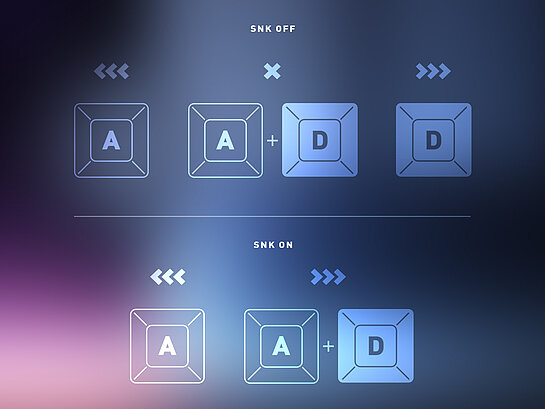
Snap Key (SNK) prioritizes the most recently pressed key without requiring the previously pressed key to be released.

This means: In-game, your character doesn’t stop when two opposing directions are pressed simultaneously. You can instantly change direction and benefit from faster, smoother movement—giving you a clear advantage in action-packed games.

MT (Mod Tap)

MT (Mod Tap)

With Mod Tap (MT), a key can perform different functions depending on whether it is tapped briefly or held. For example: holding W lets you sprint, while tapping it makes you jump. This reduces the number of keys needed and increases input efficiency.

RT (Rapid Trigger)

RT (Rapid Trigger)

Rapid Trigger (RT) ensures that the switch no longer resets at a fixed point. Instead, it reacts to even the slightest release of your finger.

This allows you to actuate the same key much faster again—an essential advantage in fast-paced FPS games.


Full control over your keyboard

CHERRY MagCrate Software

The CHERRY MagCrate software offers a wide range of customization options for TMR keyboards, giving you the freedom to tailor each key to your personal preferences and achieve optimal performance. The video shows how it works.

Who is a TMR keyboard for?

MX 8.2 Pro TMR Wireless

Competitive gamers and FPS players

When every millisecond counts, a TMR keyboard delivers the greatest advantage. Features like Rapid Trigger and Snap Key enable faster directional changes and more precise control. In fast-paced FPS games, even the smallest movements and reaction times can determine victory or defeat. In addition, high signal stability ensures that inputs remain consistent and reliable even under heavy load. For competitive players, this means more control, more precision, and a more direct overall gameplay experience.

Users who want maximum control and customization

With a magnetic keyboard based on TMR switches, you can individually adjust actuation points, sensitivity, and functions for each key. Since input is continuously detected across the entire key travel, you can define exactly when an action is triggered. Features like Dynamic Keystroke and Mod Tap also allow multiple functions to be assigned to a single key, enabling you to fully customize your layout to your needs.

Heavy typists, content creators, and power users

Anyone who types frequently or uses complex workflows benefits from the consistent precision and advanced features of a TMR technology keyboard. The smooth, precise, and consistent keystroke feel makes long typing sessions more comfortable. The low energy consumption also enables flexible wireless use, allowing you to take your keyboard anywhere.
CHERRY XTRFY TMR

TMR keyboards from CHERRY

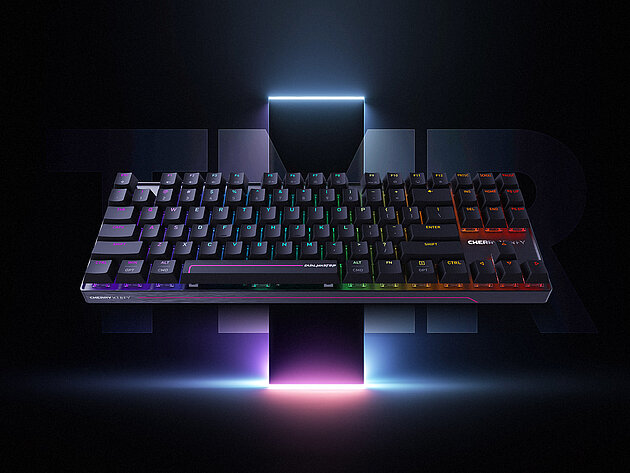
With the MX 8.2 Pro TMR and the K5 Pro TMR, CHERRY XTRFY offers two powerful keyboards featuring TMR technology.

They combine cutting-edge magnetic technology with premium build quality and top-tier performance. They are designed for anyone who demands maximum speed, precision, and customization.

Why TMR is the future

TMR technology in keyboards sets new standards in precision, speed, and customization.

Magnetic switches are increasingly becoming the new standard for modern keyboards. They enable contactless, low-wear, and highly precise input detection that surpasses traditional technologies.

Within this evolution, TMR represents the next stage. TMR doesn’t just make inputs faster—it makes them smarter, more customizable, and more energy-efficient, marking a decisive step toward next-generation keyboards.

Explore the CHERRY Keyboards